
First State Orthopaedics is an OrthoDelaware Company


In the News
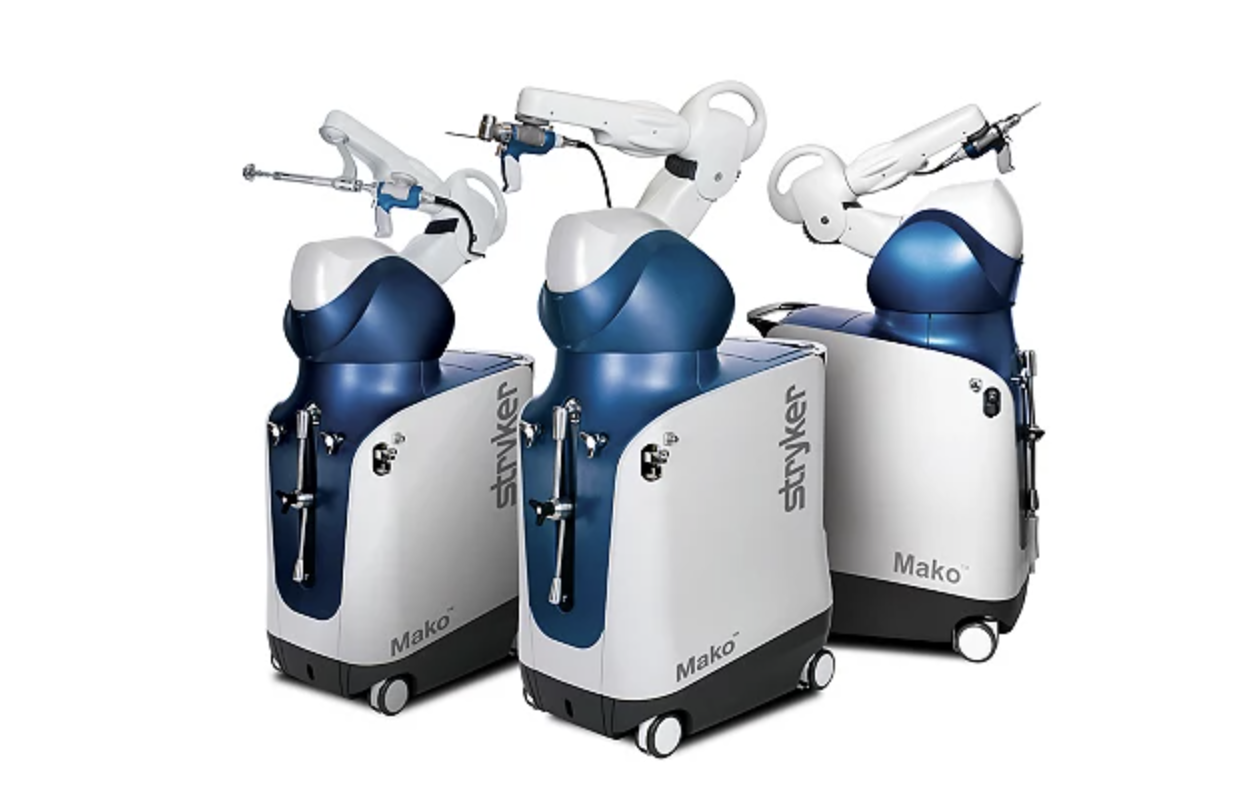
Mako Robotic Surgery: What Patients Should Know About Robotic Joint Replacement
Joint replacement surgery has become increasingly precise as orthopedic surgeons gain access to advanced imaging, computer-assisted planning, and robotic technology. One of the best-known systems is Mako Robotic-Arm Assisted Surgery, a technology used for certain knee and hip replacement procedures.
For patients considering joint replacement, understanding how Mako robotic surgery works, who may benefit from it, and what it can and cannot do can make the decision-making process easier.
What Is Mako Robotic Surgery?
Mako robotic surgery is a form of robotic-arm assisted orthopedic surgery that helps surgeons plan and perform certain knee and hip replacement procedures with greater precision. The Mako system uses a three-dimensional CT scan to create a personalized model of the patient's anatomy. The surgeon then uses that model to develop a surgical plan before entering the operating room.
During surgery, Mako technology provides additional information and guidance to help the surgeon execute the plan. The surgeon remains in control throughout the procedure. Mako is therefore better described as robotic-arm assisted surgery, rather than a robot independently performing surgery.
What Types of Joint Replacement Can Mako Be Used For?
Mako robotic surgery can be used for total knee replacement, partial knee replacement, and total hip replacement. The technology has been developed specifically for joint replacement procedures and is designed to help surgeons account for each patient's individual anatomy.
For the knee, Mako may be used when arthritis has damaged part or all of the joint. Partial knee replacement is generally considered when arthritis is limited to a specific compartment of the knee, while total knee replacement replaces more of the damaged joint.
For the hip, Mako Total Hip is designed to assist with primary total hip replacement and component positioning.
How Does Mako Robotic Surgery Work?
Mako robotic surgery works by combining CT-based three-dimensional planning, intraoperative information, and robotic-arm assistance. Before surgery, a CT scan is used to develop a 3D model of the patient's joint. The surgeon uses this model to determine implant size, alignment, and positioning.
During the procedure, the surgeon can make adjustments based on the patient's anatomy and the condition of the joint. Mako's haptic technology provides resistance and other feedback intended to help keep bone preparation within the boundaries established by the surgical plan.
This approach gives surgeons detailed information before and during surgery rather than relying solely on traditional two-dimensional imaging and mechanical guides.
What Are the Potential Benefits of Mako Knee Replacement?
Potential benefits of Mako knee replacement include greater consistency in implant positioning, personalized surgical planning, and assistance with bone preparation. Research on Mako has demonstrated improved accuracy and precision relative to manual techniques in several joint replacement applications.
Mako Total Knee technology is also designed to help surgeons evaluate joint balance before making bone cuts. Maintaining appropriate balance between the structures surrounding the knee is an important part of achieving a stable, functional replacement.
Some clinical studies have reported improvements in outcomes such as postoperative pain, hospital length of stay, and rehabilitation requirements compared with manual surgery, although individual results can vary and robotic assistance does not guarantee a specific outcome.
Is Mako Surgery More Accurate Than Traditional Joint Replacement?
Mako surgery has demonstrated greater accuracy and precision in implant positioning compared with manual techniques in clinical and laboratory studies, but accuracy is only one factor in a successful joint replacement. Surgical technique, implant selection, the patient's overall health, rehabilitation, and other factors also influence results.
The primary purpose of Mako technology is to give the surgeon more detailed information and tools for executing a personalized surgical plan.
Does Mako Robotic Surgery Mean the Robot Performs the Operation?
No, Mako robotic surgery does not mean that a robot independently performs the operation. The orthopedic surgeon controls the procedure and makes the clinical decisions. The robotic arm functions as an assistance and guidance system.
The surgeon develops and approves the surgical plan, makes adjustments when necessary, and performs the bone preparation and implant placement. Mako's technology is intended to help the surgeon carry out those steps with greater precision and consistency.
Who May Be a Candidate for Mako Robotic Surgery?
A person who needs a partial knee, total knee, or total hip replacement may be considered for Mako robotic-arm assisted surgery, depending on their diagnosis, anatomy, overall health, and the surgeon's assessment. Not every patient who needs joint replacement will necessarily benefit from robotic assistance.
The decision should take into account the severity and location of joint damage, previous treatments, physical limitations, imaging findings, and the patient's goals for treatment.
Is Recovery Faster After Mako Surgery?
Recovery after Mako surgery depends on the specific procedure and the individual patient, so robotic assistance should not be viewed as a guarantee of faster recovery. Studies have reported favorable recovery-related outcomes with some Mako procedures, including shorter hospital stays and reduced postoperative pain in certain comparisons.
After surgery, physical therapy, activity progression, nutrition, overall health, and adherence to postoperative instructions remain important components of recovery.
What Should Patients Ask Before Choosing Mako Robotic Surgery?
Patients considering Mako robotic surgery should ask whether the technology is appropriate for their specific joint problem and what benefits the surgeon expects it to provide. Important questions include whether the patient needs a partial or total replacement, what type of implant will be used, how the procedure will be planned, what recovery is expected, and what risks apply to the individual case.
Patients may also want to ask about the surgeon's experience performing robotic-assisted joint replacement and whether conventional joint replacement or another treatment would be more appropriate.
Is Mako Robotic Surgery Right for You?
Mako robotic surgery may provide surgeons with additional planning and precision tools for certain knee and hip replacement procedures, but the right surgical approach depends on the individual patient. The technology represents an important development in orthopedic surgery, particularly for personalized joint replacement planning and guided bone preparation.
For people with advanced arthritis who continue to experience pain and limited mobility despite nonsurgical treatment, discussing Mako robotic-arm assisted surgery with an experienced orthopedic surgeon can help determine whether robotic joint replacement is an appropriate option.
This article is intended for educational purposes only and should not replace individualized medical advice, diagnosis, or treatment from a qualified healthcare professional.
 First State Surgery Center
 Glasgow Surgery Center